· Skinlazia team · Guides · 8 min read
What Is Malassezia? The Yeast on Your Skin
Malassezia is a group of fat-dependent yeasts that live on human skin. Here is what it is, where it lives, and why it sometimes turns into itchy bumps.
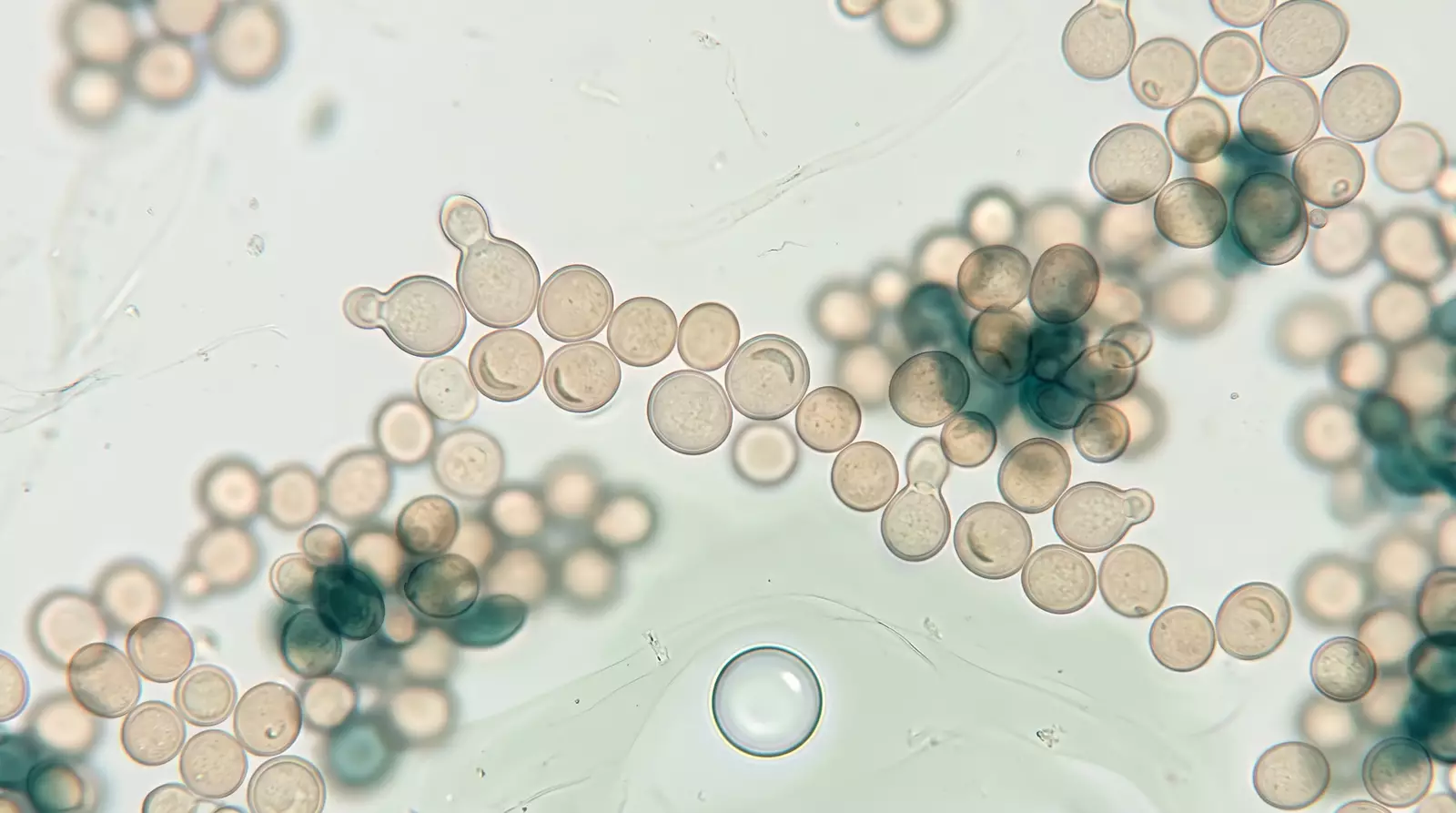
Malassezia is a group of yeasts that live on human skin, and on most days they cause no trouble at all. The same organism sits behind the itchy, uniform bumps people call fungal acne, and it is also linked to dandruff and a few other skin conditions. Knowing what it is and what it needs makes the ingredient advice much easier to follow, because you can see why certain fats matter and why a zero-yeast routine isn’t a realistic goal.
See our medical disclaimer for details.
The organism has a reputation that runs ahead of the evidence. It gets described as an invader or an infection, and neither word fits a yeast that is found on healthy skin in most adults. The more useful framing is a resident whose behaviour depends on the neighbourhood it lives in.
What is Malassezia, exactly?
Malassezia is a genus of lipid-dependent yeasts, which means they cannot build what they need from sugar alone and rely on fats from the skin to grow. Several species live on human skin, and the ones most often named in skin research include Malassezia globosa, Malassezia restricta and Malassezia furfur (the role of Malassezia across skin disorders, diagnostics and disease associations).
On healthy skin the yeast behaves like a normal resident rather than an invader, and the colonisation literature describes it as part of the skin’s usual microbial community (colonisation and disease associations). That is the first fact worth holding on to, because it changes the goal. You aren’t removing an organism that shouldn’t be there, and the research doesn’t describe a realistic way to do that anyway.
The genus name covers more than the human skin story, since related species live on other mammals, so a search for the word can turn up veterinary pages about dogs and cats. For skin questions, the species that colonise human sebaceous areas are the ones that matter.
Is Malassezia the same thing as fungal acne?
Malassezia is the organism, while fungal acne is the nickname for malassezia folliculitis, an inflammatory reaction around hair follicles that gets mistaken for acne vulgaris again and again (the 2026 clinical review, the 2025 review of underdiagnosed mimickers).
The clinical picture is fairly consistent in the case series. The bumps are small and uniform, they itch, they sit on the upper back, chest, forehead or hairline, and true blackheads and whiteheads are absent (the 110-case series). Ordinary acne involves the follicle as well, which is exactly why the two get confused and why a standard acne routine can leave these bumps untouched. The reviews also name bacterial folliculitis as a lookalike, which is another reason the pattern is worth having checked rather than assumed (the 2023 position statement).
For a closer look at the face-specific pattern, read our guide to malassezia folliculitis on the face.
Where does Malassezia live on the body?
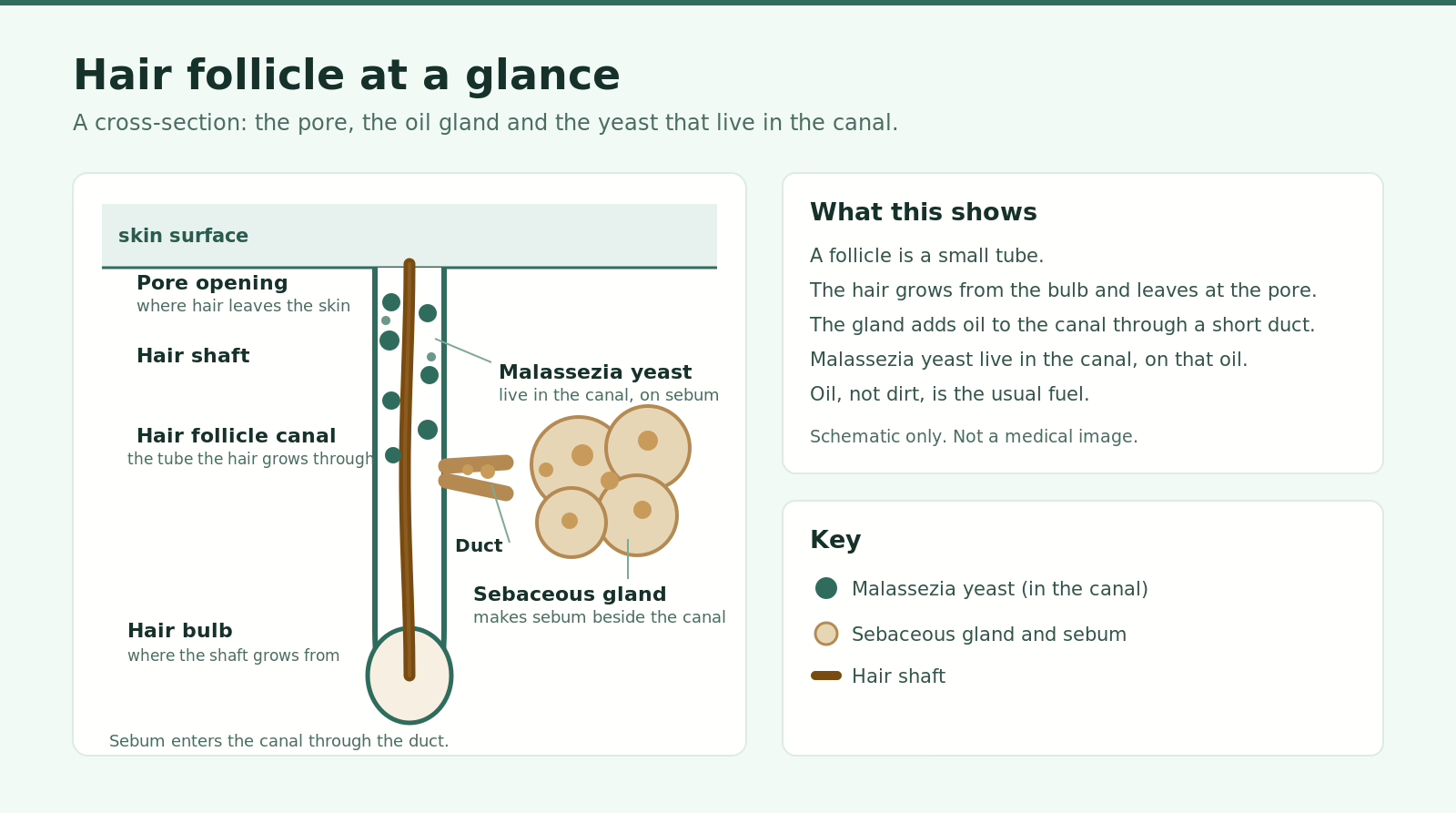
Malassezia lives wherever sebaceous glands are dense, so the scalp, the face, the upper chest and the upper back are its usual neighbourhoods. The scalp is its best-known home, and there the yeast lives as a resident rather than an invader.
The trunk and face follow the same geography. Because the organism sits inside the follicle, the conditions linked to it track the oily zones rather than spreading evenly across the body.
| Condition | Where it usually shows | What it looks like |
|---|---|---|
| Malassezia folliculitis | Upper chest, upper back, forehead, hairline | Small uniform itchy bumps with no blackheads |
| Seborrheic dermatitis | Scalp, eyebrows, sides of the nose | Flaking and redness in oily areas |
| Pityriasis versicolor | Chest and back | Pale or darker patches with fine scale |
The table is a map of where the same organism turns up, not a set of labels for you to apply at home, and the differences between these pictures are one reason a clinician’s look matters. Case reports of the bumpy form often describe the upper back and chest, which sit in the oily zones (the 110-case series).
For the scalp version in detail, our Malassezia scalp guide covers what the yeast does around the hairline.
What turns a quiet resident into a problem?
The short answer is a change in the environment rather than a new organism arriving. Heat, humidity, heavy sweating and occlusive clothing raise the fat and moisture available at the skin surface, and clinical reviews list those among the recognised risk factors (the 2026 review).
Immunosuppression is the other consistent factor, and a systematic review of pityrosporum folliculitis in immunocompromised patients reports the condition in that group specifically (the 2023 review). Antibiotic and steroid use also appear on the risk lists for the general population (the 2026 review).
None of that means your hygiene failed or that the yeast arrived from somewhere else, since the organism is already part of normal skin. The change that matters is the conditions around it.
What does Malassezia eat, and why do ingredients matter?
The yeast takes up fatty acids in a specific size range, roughly eleven to twenty-four carbons, and it gets them by breaking down the fats and esters in sebum and in skincare (the Malassezia genus review). Its enzymes help split the fats and esters it uses, and a lipase from the yeast has been shown to hydrolyse Tweens in the lab (the 2006 lipase study).
That is why oleic acid is the classic example, and the dataset flags it as one that may trigger, backed by strong evidence. Lauric acid falls inside the same usable range, so it may trigger too. Caprylic/capric triglyceride carries no known trigger, because its eight and ten carbon fats sit below the range the yeast can take up.
Esters and emulsifiers behave the same way once they are split open. Polysorbate 80 carries an oleate tail, so it may trigger at moderate evidence rather than acting as a neutral helper. Cetyl alcohol may trigger at the limited-evidence end, and our dataset notes that direct feeding proof is thin even though the structure sits close to the fats this yeast uses.
The practical upshot is that an ingredient list tells you something concrete about the yeast’s food supply, which is the whole logic behind a fungal acne safe screening routine. If you want the full list of flagged and cleared names, our ingredients to avoid for fungal acne guide sorts them by class.
Can you catch Malassezia from someone else?
The yeast is already part of normal skin for most people, so the bumps aren’t something you pick up from another person. What changes between people is the environment the yeast lives in, and that is why the same organism stays quiet on one person and causes trouble on another.
Sharing a household does mean sharing a climate and a routine, and those can shift the conditions on your skin without any transmission of the organism.
When should you see a dermatologist?
See a dermatologist when uniform itchy bumps keep returning, when a standard acne routine has done nothing after a fair trial, or when you are immunosuppressed and the bumps are spreading (the 2023 position statement on diagnosis, the review in immunocompromised patients).
A clinician can confirm the picture and rule out lookalikes, and a dermatologist may prescribe antifungal treatment when the pattern fits (the 2023 position statement). The 2020 systematic review of antifungal treatment options notes that the condition tends to come back, which is why the factors that set it up get attention alongside any prescription (the 2020 systematic review).
How do you work with Malassezia day to day?
Day to day care comes down to the environment and the products, and neither one needs a cabinet full of new bottles.
- Keep the area cool and dry, and change out of sweaty clothing soon after exercise.
- Wash the scalp, face and back with a gentle cleanser instead of a harsh stripping one.
- Let a dandruff-focused shampoo sit on the scalp for a few minutes before rinsing.
- Check leave-on products against the fat classes above before you buy them.
- Give any routine several weeks before judging it, since the follicle cycle is slow.
Nothing here rewards aggressive scrubbing or repeated washing, since irritated skin is not a calmer place for the yeast to live. Caps, headbands and tight collars trap heat right where the bumps tend to appear, so looser fabrics and a cooler room often help more than another serum. The single habit that helps most is reading the label before the product reaches your shelf. You can paste an ingredient list into the ingredient checker or use the Skinlazia app in a store, and the methodology page explains how each verdict is decided. When you want a starting point, the moisturizer and shampoo catalog pages list products whose full ingredient lists have been screened.
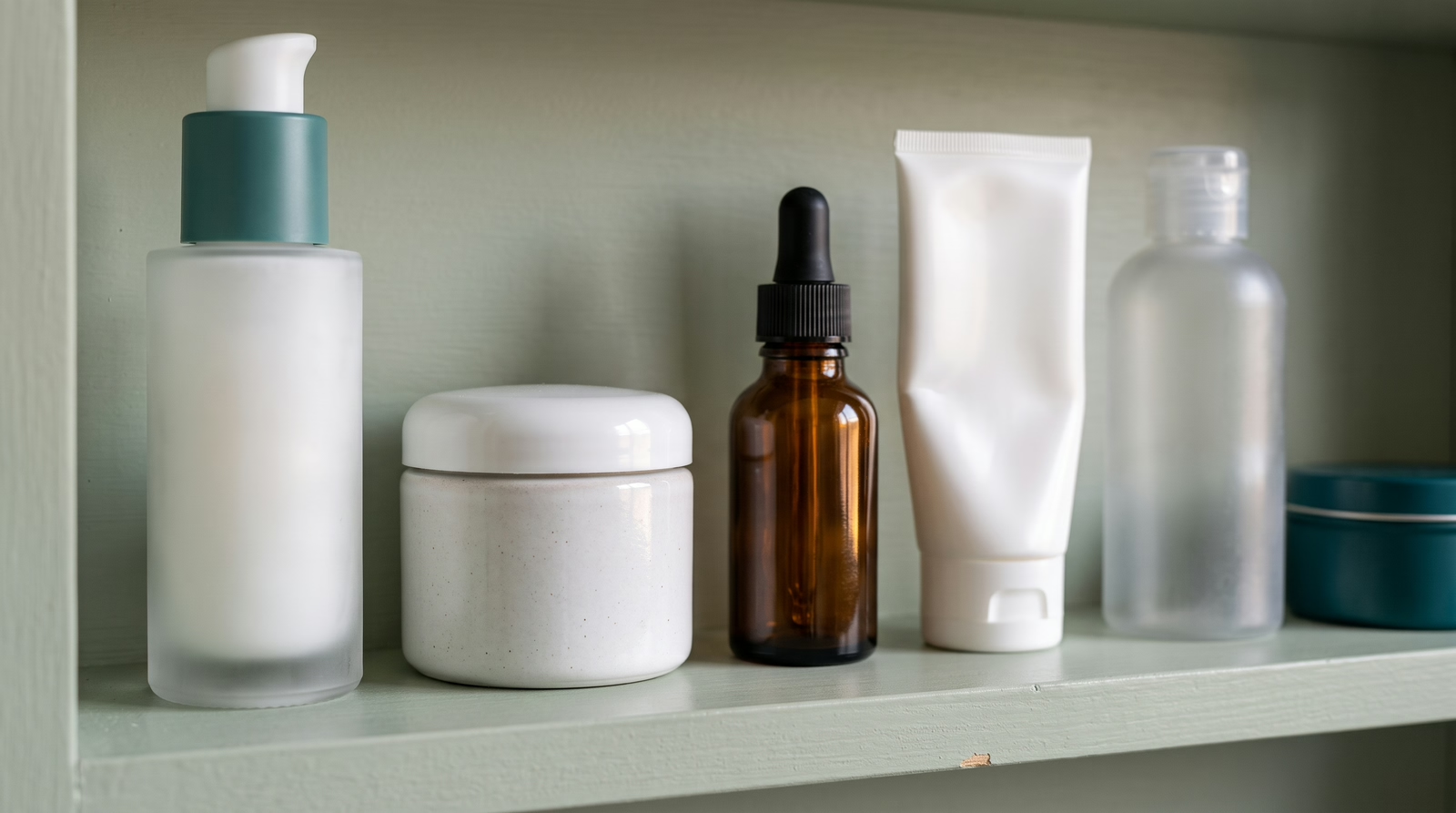
The calming part of all this is that Malassezia isn’t a bug you caught and it isn’t going anywhere. It is a resident that reacts to heat, sweat and the fats you put on your skin, and those are things you can actually influence.
Quick answers
What is Malassezia in simple terms?
Malassezia is a group of yeasts that live on human skin and need fats from the skin to grow. It remains a normal resident for most people, and it only becomes a problem when the conditions around it change.
Is Malassezia a fungus or a yeast?
It's a yeast, which is a single-celled fungus. The genus is lipid-dependent, so it relies on fats from sebum and from skincare products rather than on sugars alone.
Does everyone have Malassezia on their skin?
Most adults carry Malassezia on sebaceous areas such as the scalp, face and upper trunk. Colonisation is the normal state, and the presence of the yeast by itself is not a disease.
Is Malassezia the same as fungal acne?
Malassezia is the organism, and fungal acne is the everyday name for malassezia folliculitis, an itchy bumpy reaction around hair follicles that is often mistaken for acne vulgaris.
What does Malassezia feed on?
It feeds on fatty acids in roughly the eleven to twenty-four carbon range, which its enzymes release from triglycerides and esters in sebum and in skincare formulas.
Should I try to remove Malassezia completely?
No realistic routine removes a yeast that is part of normal skin. The useful goal is a calmer environment, with less heat, less trapped moisture and fewer of the fats it can use.